November 7th 2026
Orlando FL; Its 3:30 pm, Kenzi Dieckman, 25 is returning home from picking up her two children from school, she does professional painting for a living during the day and is a professional mother at all times. A single mother, Kenzi is raising two children, a young girl age 4 and and young boy age 8, who suffers from a rare birth defect which is not spoken about that much in mainstream media.
The condition is known as (Spina Bifida and Hydrocephalus)a birth defect which affects the spine. According to the CDC (Centers for Disease and Control)Spina Bifida, Each year, about 1,251 babies are born with spina bifida, or 1 in every 2,857 births.
Hispanic women have the highest rate of having a child with spina bifida compared with non-Hispanic White and non-Hispanic Black women.
Data from 12 state-based birth defects tracking programs were used to estimate the total number of pregnancies affected by spina bifida. This was compared to the total number of live births (the prevalence of spina bifida) for each racial/ethnic group:
Non-Hispanic White: 3.09 per 10,000 live births
Hispanic: 3.80 per 10,000 live births
Non-Hispanic Black or African-American: 2.73 per 10,000 live births, National Center on Birth Defects and Developmental Disabilities (NCBDDD)
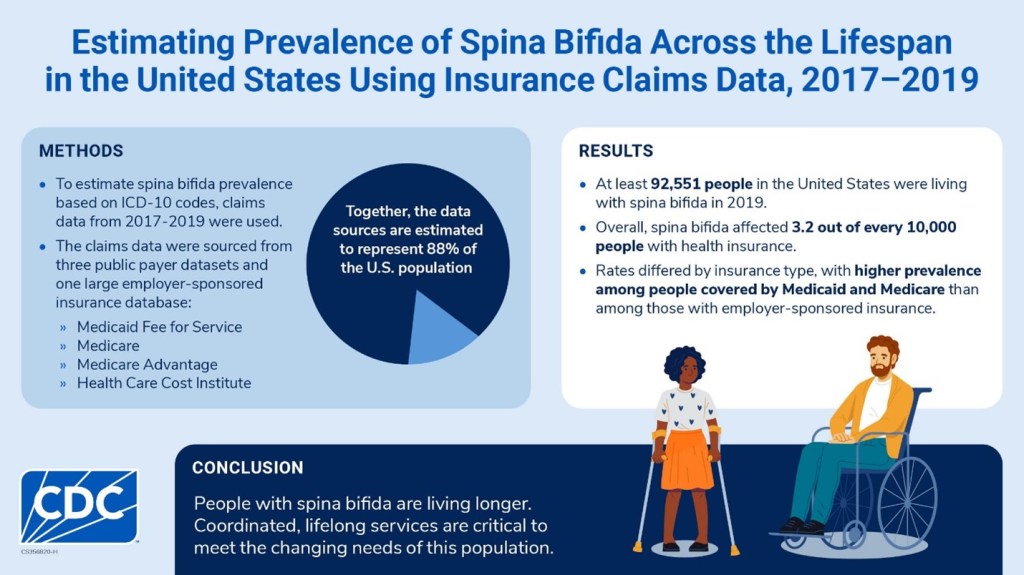
Estimated prevalence of spina bifida across the lifespan in the United States, based on insurance claims data from 2017–2019.National Center on Birth Defects and Developmental Disabilities (NCBDDD) | CDC
Felix Dieckman, is Kenzi’s 8yrd old son who was born with, Spina Bifida and hydrocephalus. Felix’s condition prevents him from be able to walk, he chooses to crawl around at home and uses a wheelchair while outside and while attending school. During the first month of pregnancy (usually around the 25th to 28th day after conception), an embryo’s flat sheet of cells folds inward to form the neural tube, which goes on to form the brain and spinal cord, If this neural tube fails to close completely along a section of the spine, spina bifida (meaning “split spine”) occurs.
About 80% to 90% of individuals with open spina bifida also develop hydrocephalus (“water on the brain”).
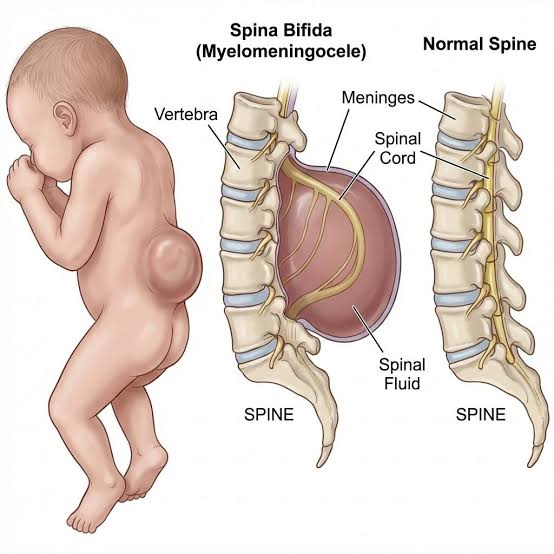
In the most severe and common form involving an open defect (myelomeningocele), a section of the spinal cord and nerves pushes through the open vertebrae and forms an exposed sac on the baby’s back.
There is a medical procedure, treatment depends heavily on the type and severity of the condition (spina bifida occulta, meningocele, or myelomeningocele). Performed before the 26th week of pregnancy (typically between 24 and 26 weeks) either via open fetal surgery or a minimally invasive fetoscopic approach. Mayoclinic.org/diseases-conditions/spina-bifida
For Felix, who has the severe condition of (Spina-Bifida) could not receive any treatments before or after birth, because doctors would perform the surgery on Kenzi who was 17yrs at the time. According to her, the doctors said “she was too young” so now her son Felix has to grow up without the ability to ever be able to walk.
Kenzi and Felix seem to accept the fact that he has a condition where he would need aid for the rest of his life, although studies show that, individuals with spina bifida and hydrocephalus experience elevated rates of internalizing symptoms, such as generalized anxiety, chronic sadness, and clinical depression, compared to the general population.
“The only challenges is him not being able to do some of the thing other kids can do” Kenzie Dieckman.
When asked about potential issues in the future with chronic depression, Kenzi responded by saying ” We will remain hopeful though we are always ready for those challenges”
According to some CDC (Center for Disease and Control) studies suicide is at about a 14% rate for some adults suffering from the medical condition.
Sources:
Sciscent, B. Y., Hallan, D. R., & Rizk, E. B. (2023). Mental health and substance use disorders in young adults with spina bifida. Journal of neurosurgery. Pediatrics, 1–7. Advance online publication. https://doi.org/10.3171/2023.2.PEDS22504
Mark S. Dias, MD, FAANS
Revised by Mark Dias, MD, FAANS; Brandon Roque, MD; Janet Jackson Coty, PT, DPT, 2024
spinabifidaassociation.org/blog/hydrocephalus-and-shunts/
National Center on Birth Defects and Developmental Disabilities (NCBDDD)
Hydrocephalus Association, copyright 2025. We would like to thank Elizabeth M. McRae, PhD for her valuable contribution and expert input. https://www.hydroassoc.org/understanding-anxiety-depression-and-mental-health-in-hydrocephalus/


Leave a Reply